Crochet Kiss-Lock Coin Purse Pattern with a Sew-In Frame
Crochet an apricot coin purse with a sew-in kiss-lock frame. Includes a rounded base, measured rim fit and stitch-to-hole distribution.
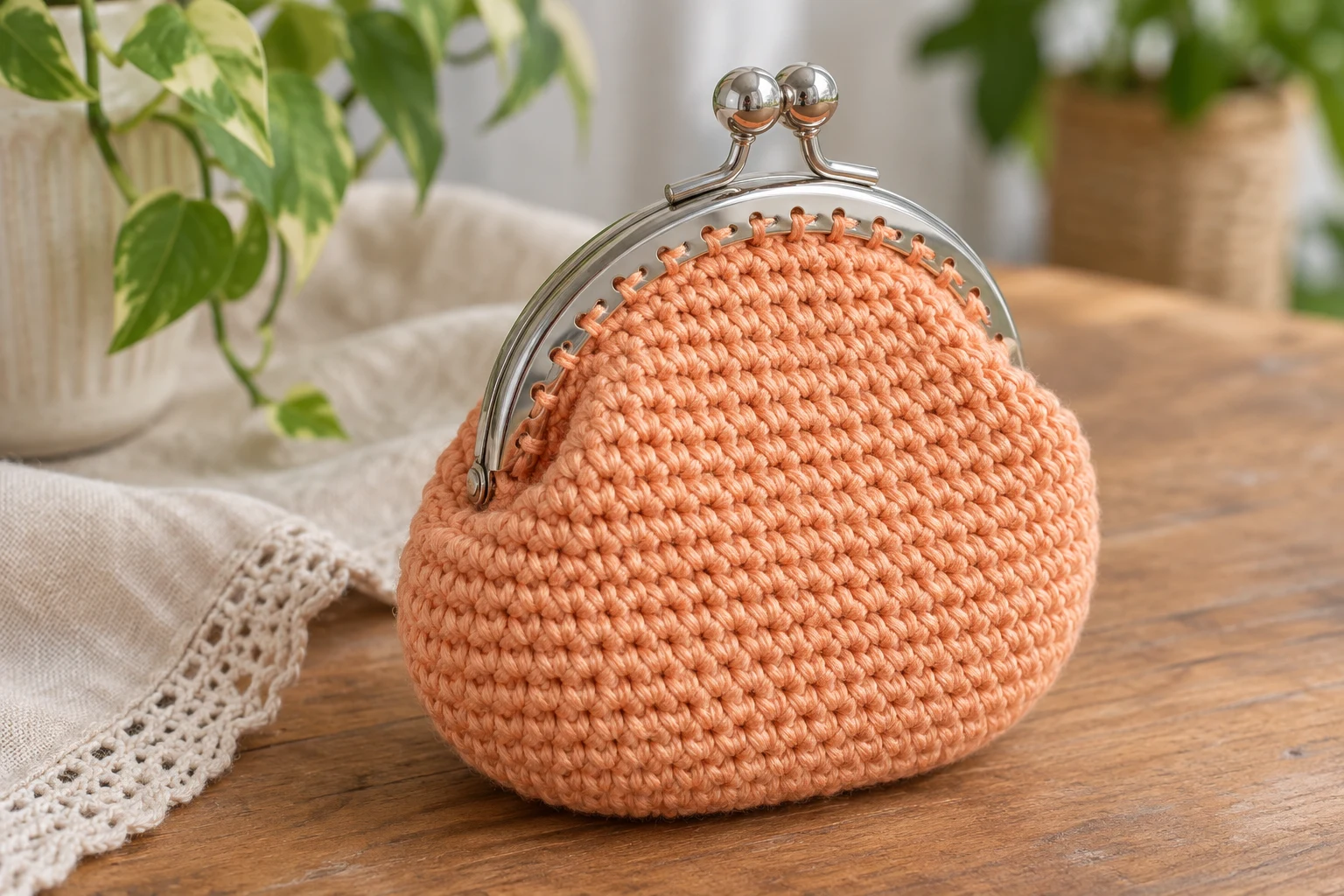
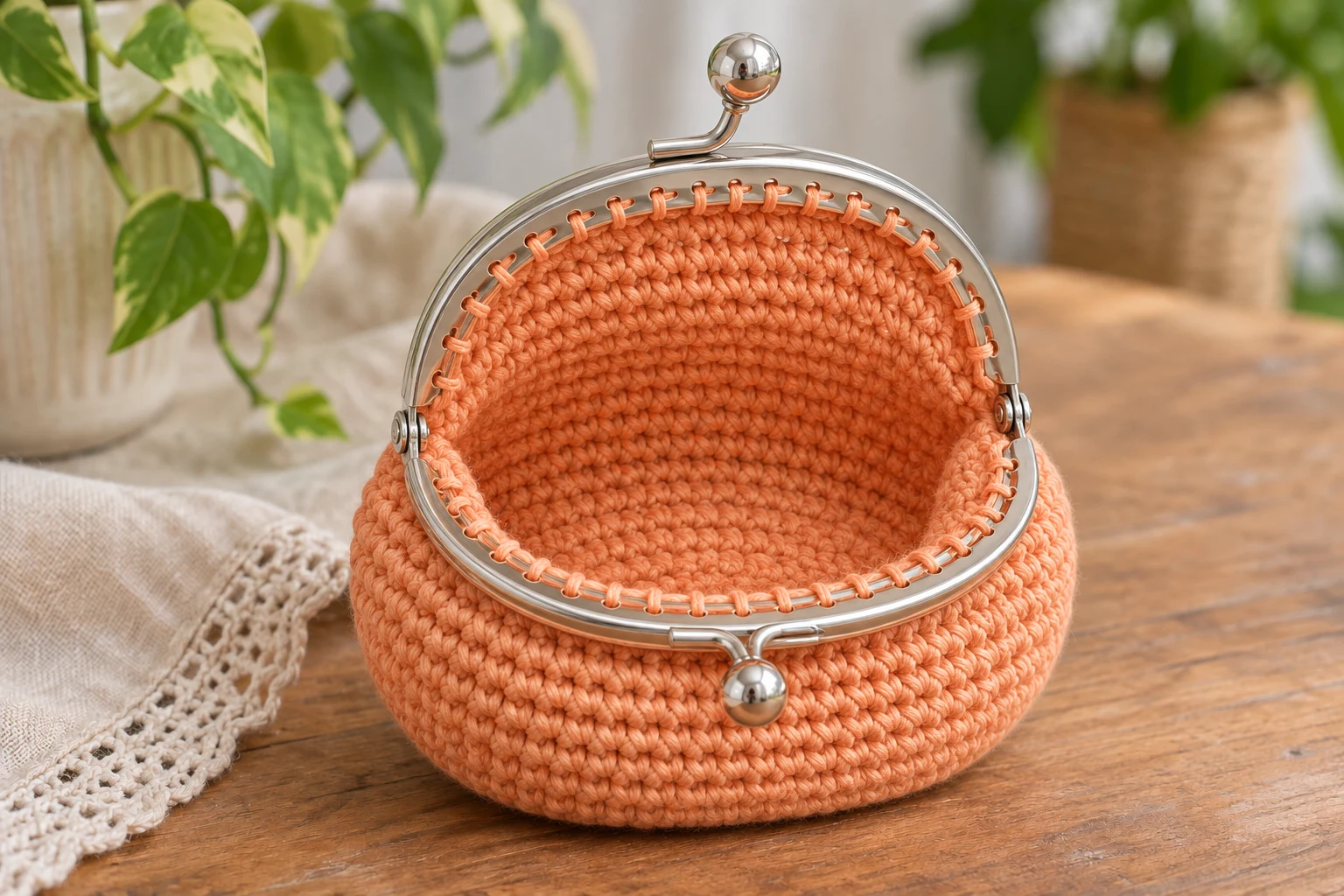
This apricot crochet coin purse has a rounded dense body and a sew-in metal kiss-lock frame. Its upper rim is divided into two equal halves and sewn into the two frame channels. The actual frame arc and hole spacing must be measured before the body is committed to its final size.
Crochet a circular base to 48 stitches and add straight walls. Mark two 24-stitch rim halves. Compare each half with its frame channel, baste the fit, then distribute the crochet stitches across the actual stitch holes without obstructing the hinge or ball clasp.
Project Overview
| Detail | Information |
|---|---|
| Terms | US crochet |
| Skill | Confident beginner with sewing |
| Construction | Crochet a circular base to 48 stitches and add straight walls. Mark two 24-stitch rim halves. Compare each half with its frame channel, baste the fit, then distribute the crochet stitches across the actual stitch holes without obstructing the hinge or ball clasp. |
| Testing | Arithmetic reviewed; physical sample not tested |
Project views are generated illustrations of the intended construction. Sizes, yarn use and attachment performance remain unverified on a physical sample.
Materials
| Material | Suggested specification |
|---|---|
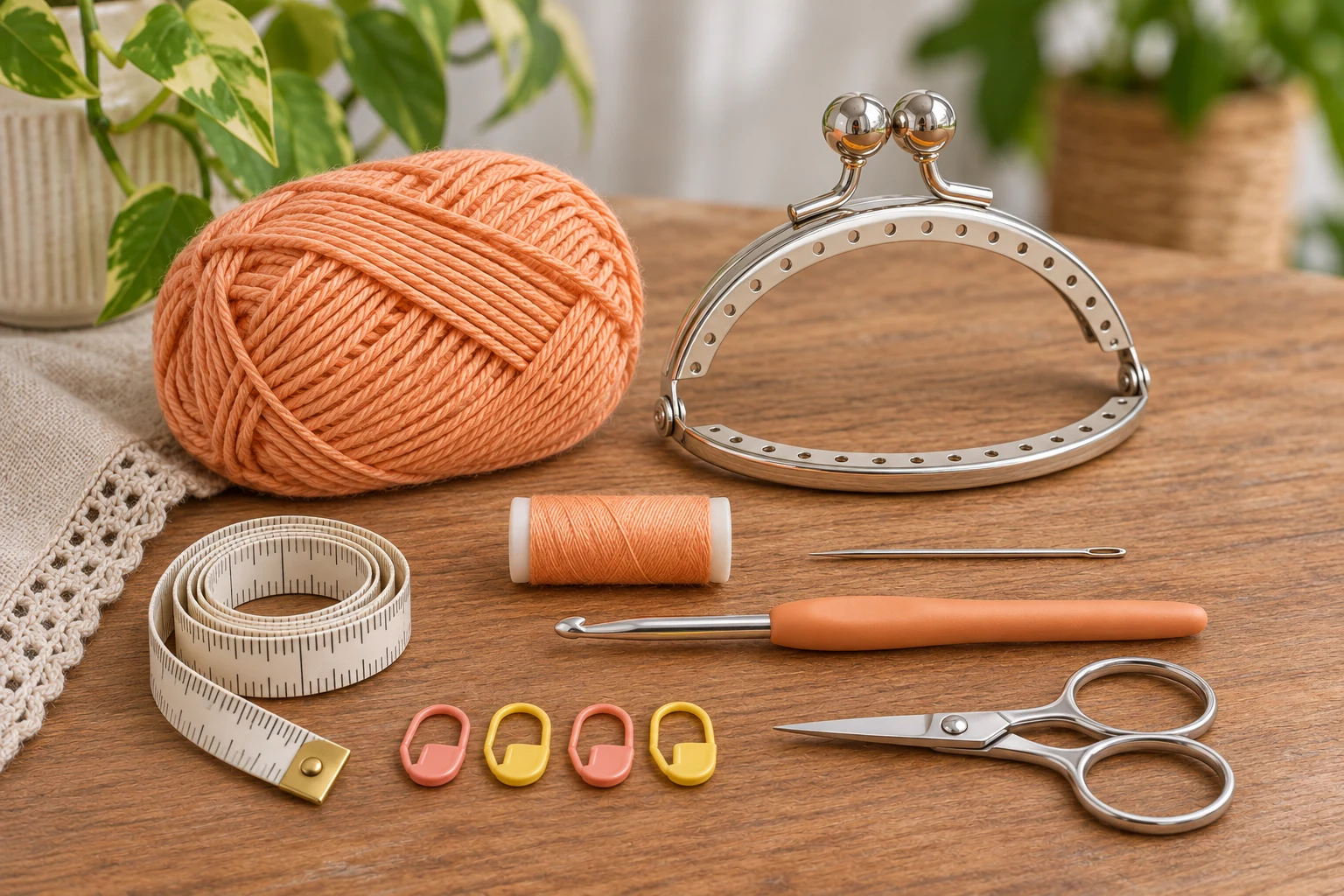
| Cotton | About 40–60 g apricot fine or DK cotton; estimate |
| Hook | 3 mm or a size fitted to the actual frame arc |
| Frame | One sew-in silver kiss-lock frame with smooth stitch holes; width around 8 cm is a starting example |
| Tools | Needle that fits the holes, strong matching thread, removable markers, scissors and tape measure |
Size and Gauge
At a planning gauge of 20 sc per 10 cm, the 48-stitch rim has about 24 cm circumference and each 24-stitch half about 12 cm length. Frame width alone does not determine channel arc length. Measure the actual channel with flexible tape or thread and swatch to match it. No finished sample measurements or closure strength have been tested.
Abbreviations and Working Notes
| Term | Meaning |
|---|---|
| ch | Chain |
| sc | Single crochet |
| sl st | Slip stitch |
| inc | 2 sc in one stitch |
| dec | Invisible sc decrease over 2 stitches |
| MR | Magic ring |
| dc | Double crochet |
US terms. Work joined sc rounds with ch 1 and joining sl st excluded. Count crochet stitches separately from frame holes.
The 48-stitch version is only suitable if each 24-stitch rim half fits its measured frame arc with a gentle even distribution. A large mismatch requires remaking the body at a suitable gauge or final count, not forcing a stretched seam.
Use a frame designed for sewing, not a glue-in channel. Avoid sharp holes, burrs or a frame that catches the sewing thread. No glue, lining or strap is specified.
Measure and Swatch for the Frame
| Round / stage | Instructions | Count / check |
|---|---|---|
| Arc | Measure each channel between hinge ends using flexible thread | Record both lengths |
| Holes | Count usable holes on each frame half | Record separately |
| Swatch | Make dense sc and measure 24 stitches along relaxed fabric | Compare with one channel |
Open and close the empty frame before starting. Exclude unusable hinge gaps from the sewing run. If its two halves differ in hole count, record that; do not assume a fixed number from the nominal frame width. The examples later illustrate distribution rather than identify a particular commercial frame.
Crochet the Rounded Apricot Base
| Round / stage | Instructions | Count / check |
|---|---|---|
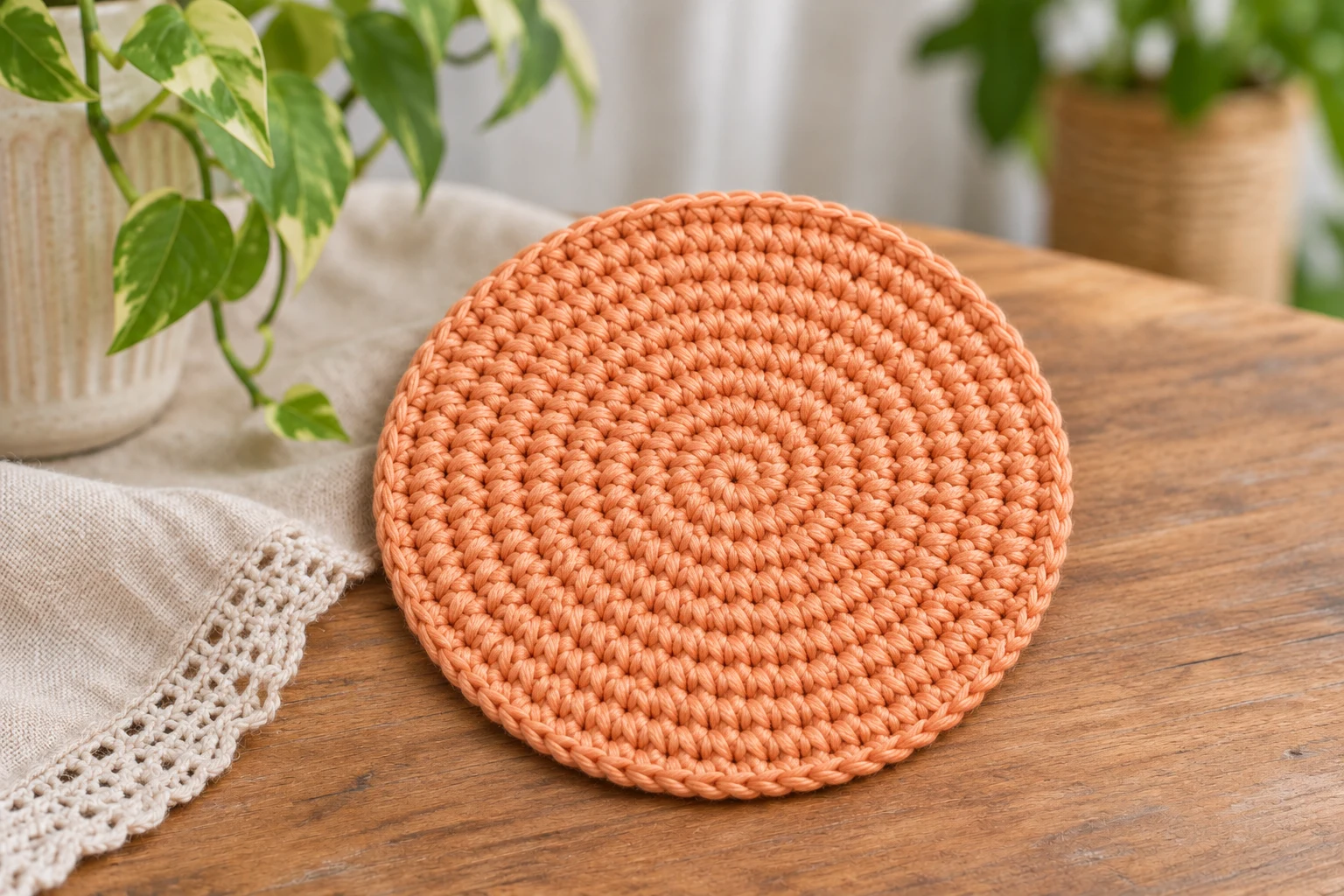
| 1 | 6 sc in MR; join | 6 |
| 2 | Inc around; join | 12 |
| 3–8 | Round n: ((n−2) sc, inc) × 6; join | 18, 24, 30, 36, 42, 48 |
Keep the base flat before raising the walls. A cupped disk from tight tension or a rippled disk from excess increases will distort the purse. The finished base diameter is not guaranteed by stitch arithmetic; compare it with the desired purse footprint.
Raise Walls and Mark the Rim
| Round / stage | Instructions | Count / check |
|---|---|---|
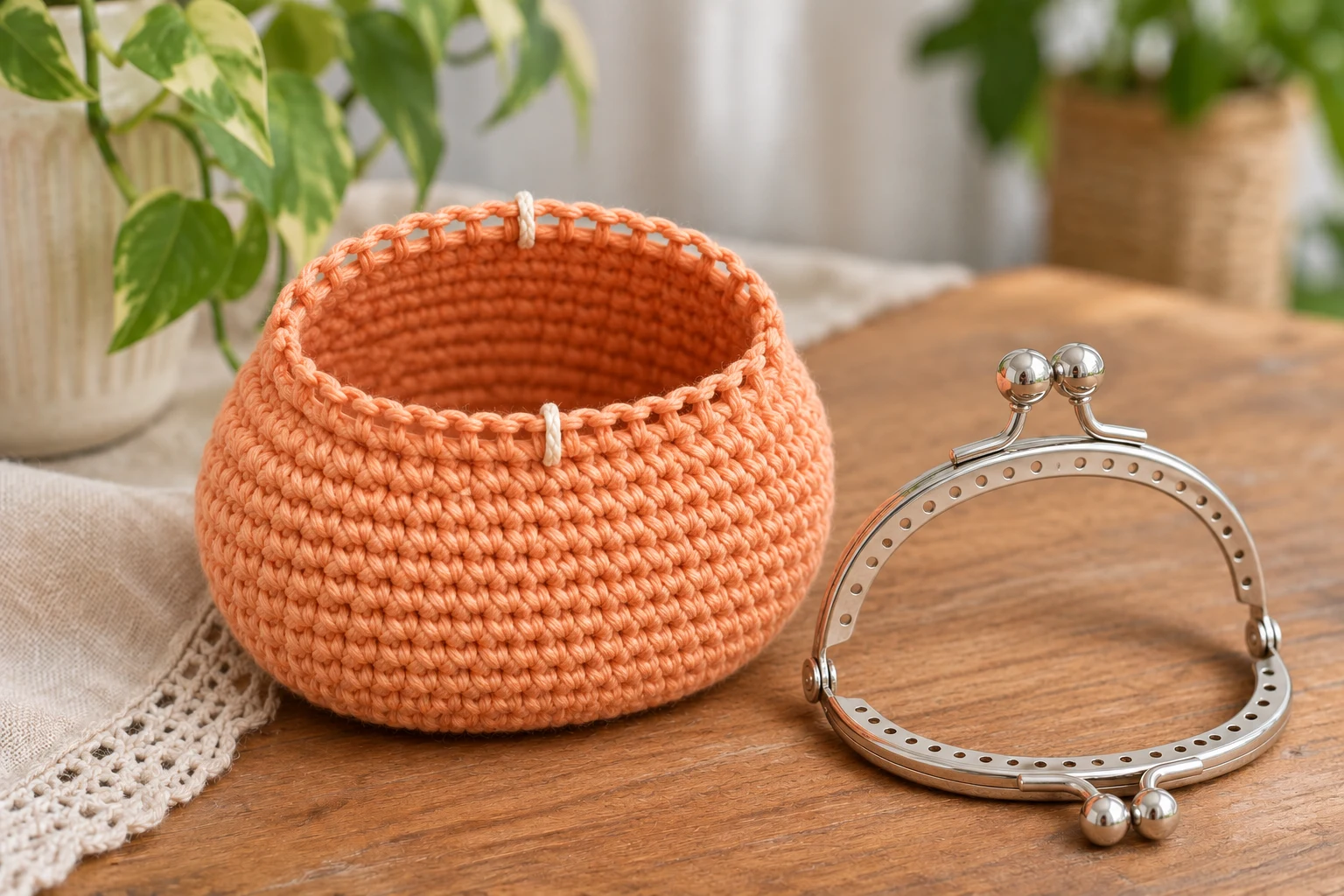
| 9–22 | Ch 1; sc around through both loops; join | 48 each |
| Rim marks | Divide final round into two equal runs | 24 + 24 |
| Hinge marks | Mark the two boundaries between those runs | Opposite sides |
The fourteen straight rounds create a soft rounded pouch rather than a rigid box. Leave the mouth open. Position both frame hinges at the boundary markers so neither rim half crosses a hinge. Test the width and fullness against the actual open frame before sewing.
Distribute Stitches Across Frame Holes
| Round / stage | Instructions | Count / check |
|---|---|---|
| If 24 holes per half | Use one crochet rim position per hole | 24 to 24 |
| If 16 holes per half | Repeat two rim positions then one rim position across alternate holes | 24 to 16 |
| If 20 holes per half | Repeat two rim positions in one hole, then one in each of next four; repeat four groups | 24 to 20 |
A shared hole receives separate thread passes through its assigned neighboring crochet positions. It does not mean forcing two yarn stitches into the metal channel as one knot. The 16-hole example repeats the 2,1 distribution eight times; the 20-hole example uses four groups of 2,1,1,1,1. For another hole count, mark quarter points and spread the positions evenly. A good count map cannot compensate for an arc-length mismatch.
Baste and Sew the Two Frame Halves
| Round / stage | Instructions | Count / check |
|---|---|---|
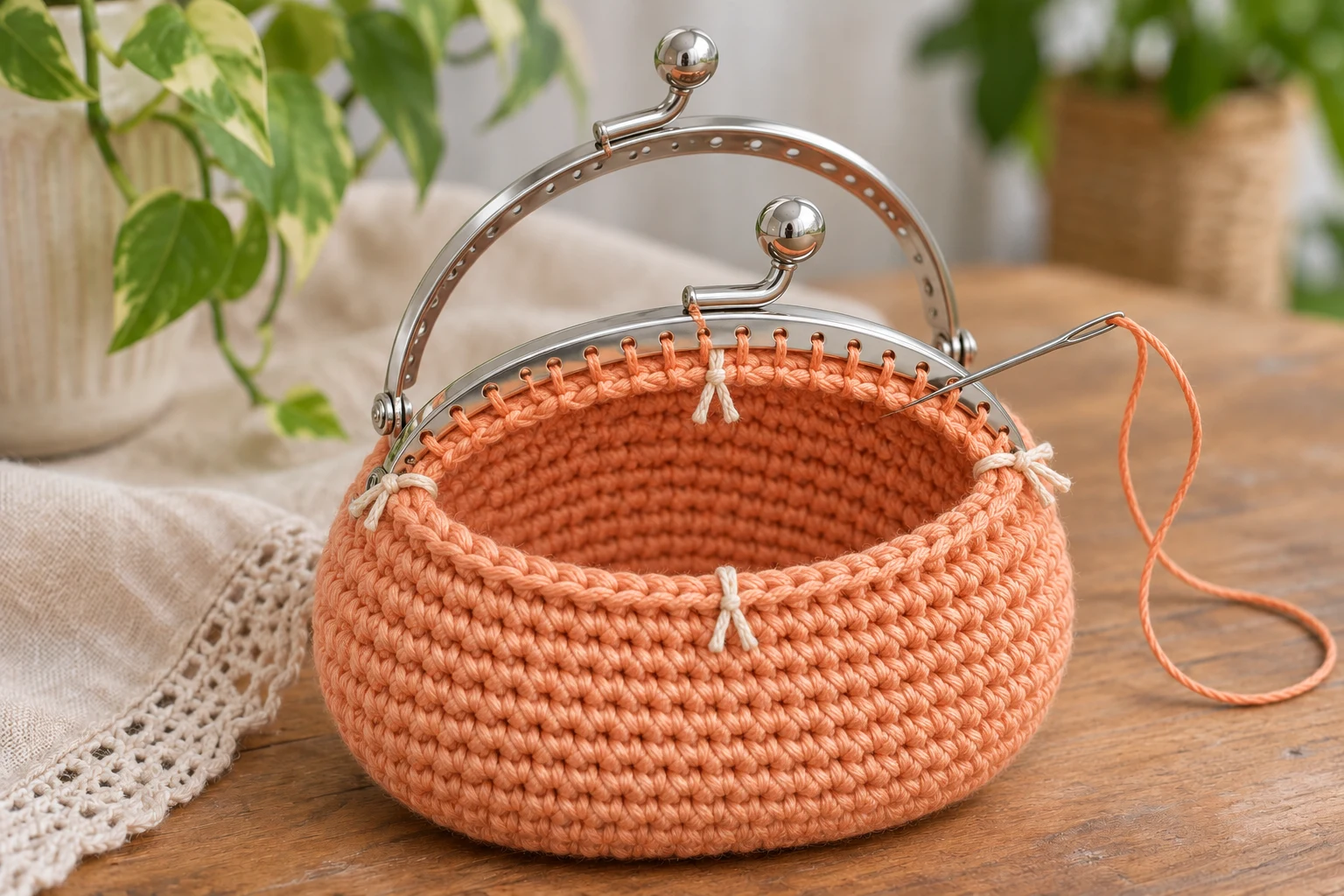
| First half | Tuck one 24-stitch rim run into its channel and baste at quarter marks | Hinge markers at ends |
| Second half | Repeat for opposite run and frame half | No body twist |
| Permanent sewing | Use short strong thread passes through holes and sound crochet fabric | Distribute according to actual map |
Work with the clasp open. Keep the frame channel seated around the rim while sewing, but avoid pulling the crochet upward into puckers. Catch several fabric strands at a hole rather than splitting one weak fiber. Close and reopen while basted; then secure the permanent thread and bury its ends inside. Never sew across a moving hinge or between the two clasp balls.
Inspect Closure and Seam Movement
| Round / stage | Instructions | Count / check |
|---|---|---|
| Clasp | Check balls meet and release normally | No trapped yarn |
| Hinges | Open fully and inspect nearby threads | No rubbing or cutting |
| Light trial | Hold over table with a few coins | No established load rating |
Inspect all sewn positions from inside and outside. If a hole frays the thread or the body pulls out of its channel, stop and correct the fit. The frame is a closure fitting, not evidence of security or tested durability. No lining is included to conceal the seam.
Troubleshooting
| Problem | Likely cause | Adjustment |
|---|---|---|
| Rim gathers | Arc too short or uneven distribution | Recheck relaxed arc before permanent sewing |
| Frame will not close | Fabric crosses hinge or ball area | Reposition boundary markers |
| Thread frays | Sharp hole or needle damage | Replace unsuitable frame or thread |
| Body pulls free | Single weak fabric strand caught | Spread passes through sound fabric |
Care and Related Projects
Follow cotton and frame care instructions. Empty the purse, avoid soaking unverified metal finishes and dry completely. Recheck hinge-adjacent stitches regularly.
For another useful construction reference, see this related crochet project. Its stitch counts and attachment positions belong to that project; keep the instructions for this design separate.
Frequently Asked Questions
Can a glue-in frame be used?
This draft specifies sew-in holes; a glue-in fitting is a different attachment method.
Is an 8 cm frame guaranteed to fit?
No. Its actual channel arcs and the fabric gauge must be compared.
Must each half have 24 holes?
No. The 24 crochet positions can be distributed across a suitable actual hole count after the arc fit is checked.
Does it include a lining?
No lining or strap is specified.
Compact Pattern Card
| Stage | Key instruction |
|---|---|
| Measure and Swatch for the Frame | Make dense sc and measure 24 stitches along relaxed fabric |
| Crochet the Rounded Apricot Base | Round n: ((n−2) sc, inc) × 6; join |
| Raise Walls and Mark the Rim | Mark the two boundaries between those runs |
| Distribute Stitches Across Frame Holes | Repeat two rim positions in one hole, then one in each of next four; repeat four groups |
| Baste and Sew the Two Frame Halves | Use short strong thread passes through holes and sound crochet fabric |
| Inspect Closure and Seam Movement | Hold over table with a few coins |