How to Keep Crochet Edges Straight: Easy 7-Step Guide
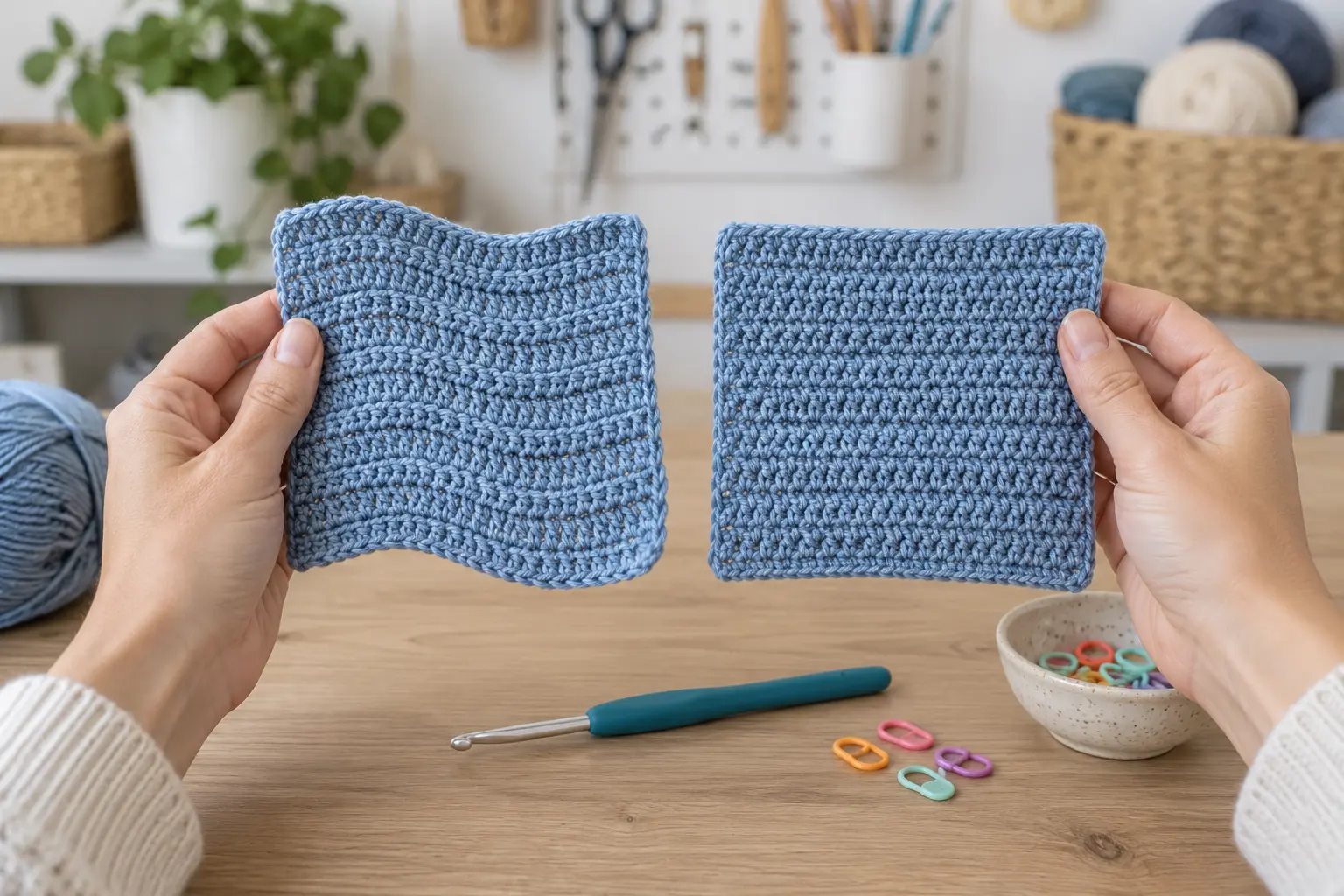
If your swatch grows narrower, wider or wavy, this guide shows how to keep crochet edges straight. The fix is usually simple: identify the true first and last stitch, use markers and keep the turning chain consistent.
Why Crochet Edges Become Uneven
- Skipping the first stitch after turning
- Missing the final stitch
- Working into the turning chain by mistake
- Changing whether the turning chain counts
- Making the turning chain much tighter or looser than the row
Practice Setup
Use smooth medium-weight yarn, a suitable hook and two contrasting stitch markers. Chain 16 and practise rows of 15 single crochets. In this lesson, the chain 1 does not count as a stitch.
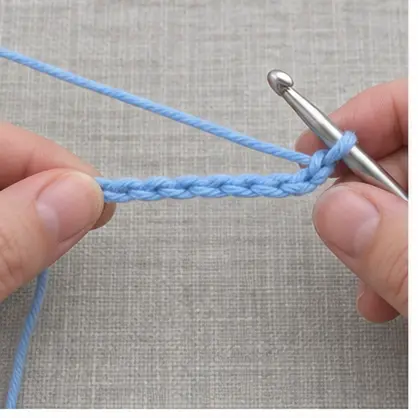
Step 1: Mark the First Stitch
Work a single crochet in the second chain from the hook. Immediately place a marker through the top V of that stitch.
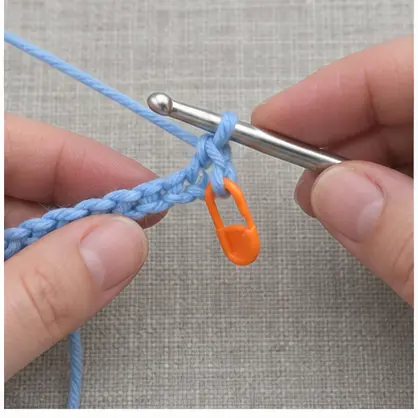
Step 2: Complete and Count the Row
Work across until 15 stitches are complete. Count the top V shapes. Mark the final stitch with a second marker.
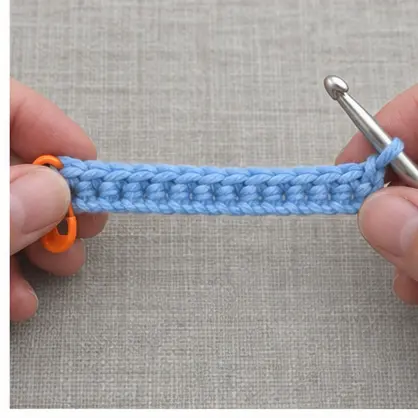
Step 3: Find the Last Stitch
The last stitch often turns sideways and hides below the turning chain. Follow the edge upward and look for the final top V directly above the marker.
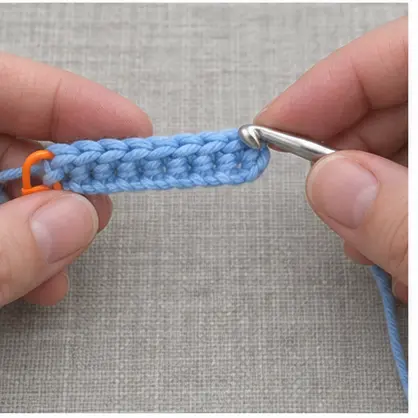
Step 4: Turn Consistently
Chain 1, turn the work in the same direction and place the working yarn behind the hook. The turning chain lifts the hook but does not count as a stitch here.
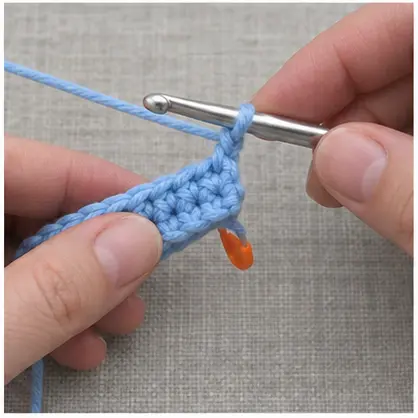
Step 5: Use the Correct First Stitch
Work the first single crochet into the same marked stitch at the base of the turning chain. Move the marker into the new stitch.
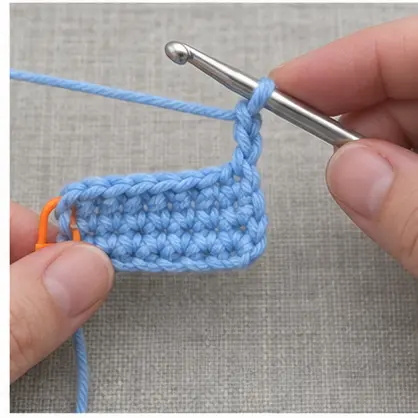
Step 6: Audit Every Row
Count 15 stitches before turning. If the number changes, undo only that row and check both ends.
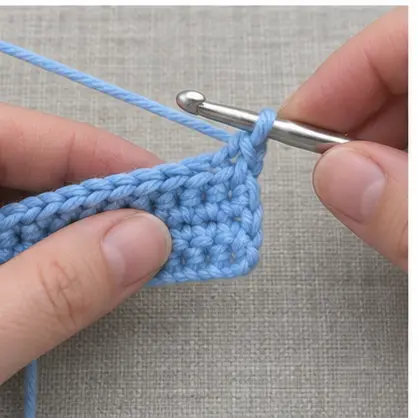
Turning Chains by Stitch
- Single crochet: usually ch 1
- Half double crochet: often ch 1 or 2
- Double crochet: often ch 2 or 3
Whether a turning chain counts varies by pattern. Follow one rule consistently instead of switching between methods.
Quick Fixes
Narrower swatch: you skipped stitches. Wider swatch: you worked into the turning chain or same stitch twice. Bulging edge: make a shorter turning chain. Tight edge: lift the first loop to the height of the row.
Frequently Asked Questions
Should I mark every row forever?
No. Use markers until you recognize the first and last stitches immediately.
Can blocking fix missing stitches?
Blocking can smooth tension, but it cannot correct a changing stitch count.
Review the single crochet tutorial and learn how to read pattern notes before starting a large project.
A Five-Row Accuracy Test
Use how to keep crochet edges straight as a repeatable checking routine rather than a correction made only at the end. Crochet five rows, count the stitches after every row and place the swatch on a ruled surface. The first and last stitch markers should form two parallel lines. If the count is correct but the edge still leans, your turning chain or tension is changing from one row to the next.
How to Repair a Small Edge Error
If you notice one missing stitch in the previous row, undo the current row and correct it; this gives the cleanest result. For a decorative project where the error is several rows back, a narrow single-crochet border can disguise a slight variation, but it cannot fix a strongly tapered panel. Record whether the turning chain counts as a stitch in the pattern margin. That single note prevents the most common cause of accidental increases.
When practising with a different yarn, confirm its category in the standard yarn-weight chart so the swatch remains easy to compare.
How to keep crochet edges straight: Final Checklist
Before finishing this how to keep crochet edges straight, confirm the stitch count, shape, seam strength and care instructions. Photograph the completed how to keep crochet edges straight in natural light and record the yarn and hook used so the result can be repeated accurately.